Join us in shaping the future of education in Florida! We have filled all our speaker spots and look forward to seeing you at the conference! For a full look at our program agenda follow the link below.
| 6:00 pm - 7:30 pm | Pre-Registration |
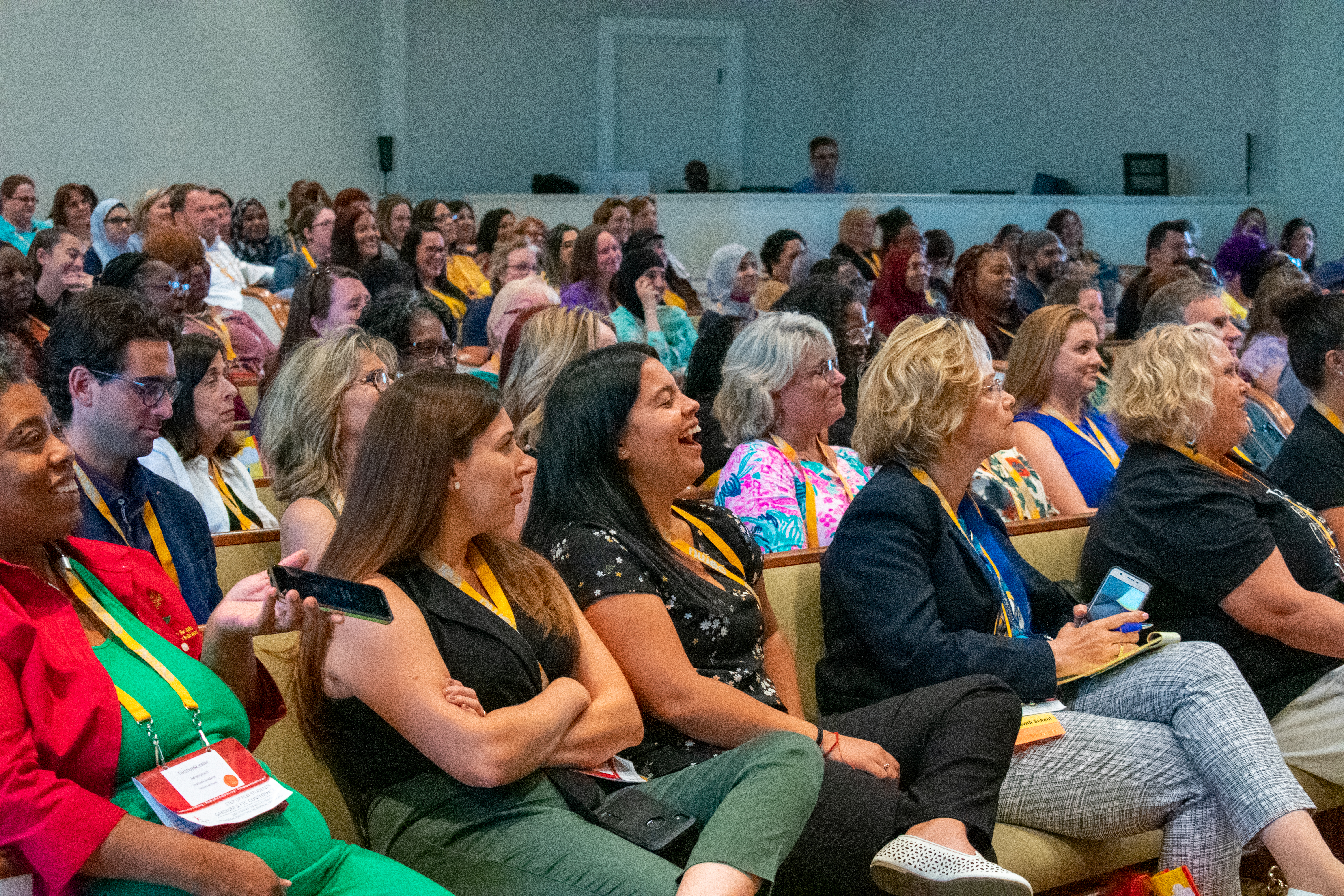
| 7:30 am - 8:30 am | Registration |
| 7:30 am | Exhibitor Hall Open |
| 8:30 am - 10:00 am | Opening General Assembly with Keynote Speaker, Michael Bonner |
| 10:00 am - 11:00 am | Exhibitor Hall & Networking |
| 10:00 am - 11:00 am | Author Book Signing at Navigator’s Library |
| 11:00 am - 11:45 am | Breakout Sessions 1 |
| 11:45 am - 12:45 pm | Lunch & Networking |
| 1:00 pm - 1:45 pm | Breakout Sessions 2 |
| 1:45 pm - 2:30 pm | Exhibitor Hall & Networking |
| 1:45 pm - 2:30 pm | Author Book Signing at Navigator’s Library |
| 2:45 pm - 3:30 pm | Breakout Sessions 3 |
| 3:45 pm - 4:30 pm | Breakout Sessions 4 |
| 5:00 pm | Exhibitor Hall Closed |
| 5:00 pm - 7:00 pm | Saddle Up with Step Up Evening Social with Coy Bowles |
| 7:30 am | Exhibitor Hall Open |
| 8:30 am - 9:30 am | Opening General Assembly with Keynote Speaker, Derrell Bradford |
| 9:45 am - 10:30 am | Breakout Sessions 5 |
| 10:30 am - 11:00 am | Exhibitor Hall & Networking |
| 10:30 am - 11:00 am | Author Book Signing at Navigator’s Library |
| 11:15 am - 12:00 pm | Breakout Sessions 6 |
| 12:15 pm - 1:00 pm | Closing General Assembly with Keynote Speaker, John Kirtley |
| 1:30 pm | Exhibitor Hall Closed |
Private and charter schools are often expected to deliver high-quality programming with limited resources, yet many available funding opportunities remain underutilized. This session demystifies grants, partnerships, and free support spanning federal, state, and nonprofit sources and shows how to align them with school priorities. Participants will gain practical strategies to secure funding, avoid compliance pitfalls, and build sustainable support for student success.
Focusing on how Florida Sports Virtual Academy has impacted student athletes across the entire state by utilizing amazing state programs.
Students are immersed in a constant stream of persuasive and often misleading information, making it critical they develop skills to evaluate evidence, identify bias, and recognize flawed arguments across all subjects. This session showcases how educators can move beyond basic fact-checking to build transferable critical thinking skills using free, standards-aligned resources from Generation Skeptics. Participants will learn practical strategies to help students analyze information, communicate evidence-based conclusions, and navigate complex media with confidence. Attendees will also explore opportunities to extend learning through student clubs, expert-led sessions, and educator leadership pathways.
This session is designed for school leaders considering accreditation who may perceive the process as complex or out of reach. Participants will gain a clear understanding of the accreditation pathway and how it strengthens credibility, enhances quality, drives operational improvement, and increases student opportunities such as credit transferability. Attendees will leave with practical insights, increased confidence in pursuing accreditation, and dedicated time for questions and discussion.
Please join us as we unpack how LEGO® Education solutions support hands-on learning experiences, boosting confidence and transforming the way students learn through purposeful integration of LEGO bricks and hardware. This session will cover how LEGO Education's learning solutions can be used to address various aspects of Florida's academic standards in various disciplines. Participants will walk away with new ideas and ready-to-implement strategies.
Public education is in the midst of a historic transition. Not since the mid-1800s has public education experienced this much change. We will discuss what is driving this change and how it will impact teaching, learning, and schools moving forward.
Explores the benefits of integrating AI into education while maintaining academic integrity and high standards. Participants will learn how to use AI as a tool to enhance instruction, support critical thinking, and improve efficiency without replacing authentic student work. Attendees will gain practical strategies to implement AI responsibly, ensuring it strengthens learning rather than compromising it.
As Florida’s expanded education funding creates new opportunities, school leaders are seeking innovative technologies that improve outcomes while simplifying implementation. In this session, Tayla Rooney highlights how schools are using Let’s Go Learn (LGL) and AI-enabled tools to drive personalized learning, leverage diagnostic data, and strengthen instructional and special education practices. Participants will gain practical examples of how data-driven, AI-supported solutions enhance decision-making, streamline processes, and better support every learner.
Are you interested in taking full advantage of everything Step Up for Students offers the families in your community? Marketing your school and customizing your enrollment strategy during the inquiry and admission process can help. Find out how to grow your enrollment, increase your use of funding, and tailor your admission approach in a way that honors who you are and what you stand for.
This workshop highlights a comprehensive, ecosystem-focused approach to supporting students with exceptionalities by strengthening both family and educator capacity. Participants will explore practical strategies to provide compassionate, resource-driven support for families while equipping educators with targeted tools and training that improve student outcomes and enhance staff retention. Attendees will leave with actionable insights and collaborative approaches that can be immediately implemented to better serve diverse learners.
Looking at the key points of IEPs and understanding what the categories mean. This session will also discuss understanding the UA scholarship and ways of accommodating students in the classroom.
This session offers a practical, story-driven look at how families find and choose non-traditional education options, including homeschooling and microschools. Participants will gain insight into common misconceptions, what parents wish they knew earlier, and how community supports like podcasts and learning spaces extend beyond academics. Attendees will also explore what’s working well in Florida and the challenges families still face, with actionable takeaways for both educators and families.
In this interactive session, participants will explore how to transform everyday instruction into opportunities for leadership development and ethical growth. Drawing on real classroom examples, they will demonstrate how to integrate traits such as professionalism, collaboration, adaptability, and quality orientation into academic objectives and assessments. Attendees will learn practical strategies to design lessons that build both character and competence, aligning with Florida’s vision for innovation and student-centered education.
School leaders are often expected to navigate conflict and communication challenges without formal training, which can impact trust and school culture. This interactive session provides practical frameworks and tools to help leaders address difficult conversations with clarity, confidence, and emotional awareness. Participants will leave equipped to manage conflict effectively, strengthen relationships, and foster accountability across their school communities.
This presentation explores the powerful connection between emotional states and learning outcomes. It equips educators and parents with practical, research-aligned strategies to support children’s emotional regulation, engagement, and academic growth. The goal is to help parents and educators create emotionally safe, motivating learning environments where children can thrive. Participants will learn how to integrate emotional literacy into educational practices and strengthen academic and personal outcomes through a deeper understanding of how emotion shapes learning.
Challenging the belief that schools must choose between accountability and staff retention by demonstrating how value-driven leadership can achieve both. Participants will explore the root causes of staff disengagement and learn how clear expectations, trust, and consistent feedback improve morale and retention. Practical strategies such as stay interviews and accountability conversations equip leaders with tools to strengthen culture and reduce turnover. Attendees will leave with actionable approaches to build supportive, high-performing teams where educators choose to stay.
Highlights how artificial intelligence can support digital transformation for school leaders by enhancing daily operations, communication, and decision-making. Participants will explore practical applications such as drafting communications, creating templates, optimizing scheduling, and improving school documents. AI-driven insights and automation help reduce repetitive tasks, increase efficiency, and strengthen strategic and instructional decisions. Attendees will leave with actionable ways to leverage AI to save time and focus more on leadership and student outcomes.
This self-study explores how best practices in teacher development—based on Laura Desimone’s research centered on teacher learning and the influence of instruction on student learning—can foster collective teacher efficacy, satisfaction, and retention. Participants will examine intentional structures for teacher growth that prioritize student learning outcomes while strengthening educator support systems.
This session explores effective cognitive training strategies designed to support struggling students in building essential learning skills. Participants will gain practical tools to strengthen memory, attention, processing, and problem-solving abilities that directly impact academic success. Attendees will leave with actionable approaches to help students improve confidence, independence, and overall performance.
Empowers students to create their own opportunities through an AI-powered, no-code capstone program that guides them from ideas to a functioning business in one term. Participants will learn how to implement the curriculum, integrate AI tools, and align projects with real-world outcomes and scholarship goals. Attendees will gain practical strategies to help students build portfolio-ready work and prepare for college or immediate business launch.
This impactful panel features Florida Yass Prize Awardees who share firsthand experiences on innovation, scaling, and navigating the evolving education landscape. Participants will gain insight into the Yass Prize application process and how the STOP principles drive sustainable, transformational, and outstanding school models. The session highlights how involvement in the Yass Prize extends beyond funding, fueling innovation, empowering leaders, and amplifying the role of families in education reform.
Introduces the Camp Summer Garden Social Skills Squad, an inclusive, Minecraft-themed model designed to support social-emotional development for students with diverse needs in out-of-school settings. Participants will learn practical, immediately applicable strategies such as visual schedules, sensory support, and play-based activities to improve engagement, self-regulation, and peer interaction.
Highlights how an educator’s passion can drive innovation, student agency, and new opportunities in the classroom and beyond. Drawing from real-world experience building successful homeschool STEAM programs, participants will explore how play-based, maker-centered approaches can transform learning and even lead to entrepreneurial ventures.
Active shooters in schools continue to be part of today’s educational reality. This session explores how attack methods and response strategies have evolved and how understanding these trends can help schools assess risk potential and develop common-sense mitigation strategies.
Environments are never neutral—they either help or hinder learning. This workshop explores why ProSocial Learning is key to future student success and how learning environments can be intentionally designed to support these experiences. Participants will also examine a case study showing how transformed learning spaces improve engagement and future readiness.
AI is already shaping how students learn, create, research, and prepare for their futures. Rather than focusing on fear or banning tools, this session explores how schools can teach students to think with AI responsibly and creatively. Participants will leave with practical ideas and a fresh perspective on preparing students for a world where AI is no longer optional—it’s normal.
Explores how educators’ underlying beliefs about learners and inclusion shape everyday instructional decisions and student experiences. Through reflection and real-world scenarios, attendees will gain practical tools to make small belief shifts that expand access, engagement, and outcomes for all learners without increasing workload.
This session helps schools understand how artificial intelligence is already impacting students and classrooms. Participants will learn what AI is, how generative AI tools work, and how students are currently using them. The presentation also addresses academic integrity, bias, online safety, and practical classroom implementation strategies.
Explores the limitations of traditional motivation systems and why rewards often lead to short-term compliance rather than lasting engagement. Participants will examine how to foster intrinsic motivation by creating learning environments that promote ownership and curiosity while developing resilient, self-driven learners.
With the expansion of the Family Empowerment Scholarship for Students with Unique Abilities (FES-UA) and the Personalized Education Program (PEP), Florida has entered a new era of educational customization. This session provides a structural framework for moving beyond “off-the-shelf” curriculum models to design robust, individualized learning pathways.
Learn about legitimate and winnable scholarship opportunities, discover where most scholarship funding is located, and explore strategies for identifying little-known financial aid opportunities families can access now.
This interactive session explores the connection between student engagement and agency while helping participants reflect on instructional practices that support self-directed learning. Attendees will gain practical strategies that promote active, student-driven learning experiences.
AI is already changing how we teach and work, but many schools are unsure where to begin. This session explains what AI is, why it matters, and how educators can confidently bring AI into the classroom using practical examples and responsible implementation strategies.
Good contracts preserve and define relationships, and how schools approach enrollment contracts sets the tone for the school year. Attendees will learn how to create and implement more effective family enrollment contracts.
Students across Florida are facing increased stress and emotional challenges that impact learning, behavior, and overall success. This session introduces the Triumph Steps® framework, a neuroscience-informed approach that builds emotional regulation, resilience, and personal responsibility in diverse learning environments. Participants will gain practical, low-cost strategies to support student wellbeing, engagement, and focus, including for those with anxiety or ESE needs. Attendees will also learn how to strengthen classroom climate and model emotional regulation to create environments where all students can thrive.
Effective grammar instruction goes beyond isolated rules, helping students understand how language works within authentic reading and writing. This session introduces a research-based, hands-on approach using mentor sentences to build critical thinking, deepen understanding, and improve writing. Participants will learn practical strategies—such as annotation—to help students make intentional writing choices and strengthen originality in an age of AI. Attendees will leave with ready-to-use tools to teach grammar in a meaningful, integrated way that supports all learners.
Leaders can feel isolated to solve issues and concerns across their school(s) community, and with technology playing a vital role in educational decisions. A problem of practice (PoP) role-alike collaborative can be a very powerful way to solve tech issues together. Join this session with like-minded leaders in a unified approach that allows thought leaders to draft, craft, and share ideas, challenges and solutions alongside other charter school greats. At the end of the session, participants will have a clearer understanding of the following: Gen AI: policy, technology, and decision making, how to join a PoP collaborative to support your learning and growth as a professional, and action steps to consider back at your school.
Private schools often struggle not from operations alone, but from the unrecognized emotional and psychological demands placed on leaders. This session explores how leadership mindset and the emotional cycle of change impact decision-making, burnout, and long-term sustainability. Participants will gain practical tools to navigate challenges with clarity, set healthy boundaries, and lead with greater consistency and resilience. Attendees will leave equipped to move from reactive leadership to intentional, sustainable practices that strengthen both themselves and their schools.
High school students are often expected to make major life decisions without structured preparation in essential workforce skills. This session highlights the importance of intentionally teaching career readiness, including financial literacy, communication, and decision-making. Participants will explore Connect to Your Calling (C2YC), an interactive, flexible program that equips students with real-world skills through engaging, practical learning experiences. Attendees will leave with strategies to implement career readiness instruction that supports student success beyond graduation without adding burden to schools.
Engaging boys in learning can be challenging when traditional strategies fall short. This session provides eight research-informed, practical approaches to improve motivation, focus, and behavior through techniques such as hands-on learning, healthy competition, and effective communication. Participants will gain actionable tools to build stronger connections, foster confidence, and create environments where boys are engaged and empowered to succeed.
Microschools across Florida are achieving strong outcomes by aligning with how the brain naturally learns, connects, and thrives. This session explores the neuroscience of belonging and how small, student-centered environments support engagement, emotional regulation, and success—especially for neurodiverse learners. Participants will gain practical insights on designing culture, relationships, and learning structures that enhance both student outcomes and staff sustainability.
This workshop explores how Huntington Learning Center combines personalized tutoring, test preparation, and innovative technology to improve student outcomes. Participants will gain insight into research-based instruction, individualized learning plans, and digital tools that support academic growth. Attendees will leave with a clear understanding of how these strategies drive students to success.
Gain a comprehensive understanding of the Florida Tax Credit (FTC) Scholarship program and the role of Step Up For Students as a Scholarship Granting Organization (SGO). This session will provide key program updates, actionable fundraising strategies, and partnership opportunities that can directly benefit your school. Attendees will leave with practical insights to maximize program impact, strengthen school resources, and better support the families they serve.
Behavior narration is a powerful classroom management tool based on the work of Lee Cantor. Behavior narration helps student be successful in class, set a positive and compliant classroom environment, reduces disruption in classroom, ensures compliance with key IEP and 504 plan goals, and reduces disciplinary referrals. Teachers and administrators will leave with a simple, easily implemented classroom procedure that is applicable K-12 in any setting.
This session explores how Florida’s rich cultural diversity, layered history, and unique environmental landscape can be thoughtfully woven into compelling children’s literature. Drawing from my experience writing well-researched works focused on Florida history and environmental science, I’ll share how authentic research and cross-curricular connections can transform real places, historical events, and diverse voices into meaningful stories that educate and inspire young readers.
This presentation introduces neurofeedback, a non-invasive brain-training approach that uses real-time feedback to help individuals regulate their brain activity. The purpose is to explain how neurofeedback works, the science behind it, and what conditions or goals it may support (such as focus, memory, mood, stress regulation, sleep, and overall brain performance). The audience will benefit by gaining a clear, easy-to-understand overview of neurofeedback, how it works, and insight into whether this approach may be a helpful option for themselves, their families, students or clients.
This workshop provides educators, leaders, and home-education organizations with a practical framework to help students build a strong personal brand grounded in self-awareness, values, and future readiness. Participants will learn how identity, mindset, and executive function shape student confidence, engagement, and long-term success, along with strategies to strengthen communication and self-advocacy skills. The session also highlights emerging workforce trends to better prepare students for an evolving, skills-based economy. Attendees will leave with a simple, repeatable system to foster student ownership, motivation, and real-world readiness.
Workshop goal: Overcoming “Teacheritis”: Reigniting Passion, Purpose, and Productivity in Education After years in the classroom, it’s easy for even the most dedicated educators to experience “teacheritis” — that feeling of burnout, exhaustion, and loss of motivation. This workshop is designed to reignite the spark that first drew you to teaching. Through humor, reflection, and practical strategies, we’ll explore how to overcome fatigue, rediscover creativity, and set meaningful goals that bring joy and purpose back into your classroom and professional life. Participants will walk away feeling refreshed, inspired, and equipped with tools to thrive—not just survive—the demands of education today.
A la carte learning in Florida has rapidly expanded, with more than 140,000 students now using ESAs to customize their education—representing over $1 billion in funding. This session explores how the shift from school choice to education choice is driving the growth of innovative providers, including offerings from former educators and school districts. Participants will gain insight into emerging models, key trends, and real-world examples shaping this movement. The session also addresses ongoing challenges, including navigation for families and ensuring accountability across a growing provider landscape.
Beyond Direct Instruction is a movement-based teaching methodology that enhances communication, socialization, and academic learning through active engagement. It integrates skills such as choice-making, self-regulation, collaboration, and persistence into everyday instruction while promoting student leadership and participation. Participants will learn how to apply this flexible approach across various lessons to improve engagement and student outcomes.
Introduces the Parent → Partnership → Mastery Framework, a practical model for delivering individualized instruction within Florida’s education choice landscape. Participants will explore how strong parent partnerships and targeted, one-on-one support can better meet the needs of diverse learners, including those served through scholarship and home education programs. Through real-world examples and planning strategies, attendees will gain actionable tools to drive measurable student mastery. The session emphasizes how collaboration between educators and families leads to stronger outcomes for every learner.
Attendees will learn about the newest research and national trends that are literally redefining what it means to be dyslexic. Join me for resources that will build your staff's capacity to support learners with dyslexia today and in the future.
Today’s students are growing up surrounded by technology, comfortable with apps, fluent in devices, and confident navigating digital tools. But familiarity is not the same as understanding. A widening gap is emerging between using technology and truly understanding how it works, why it works, and when it can fail. This session explores the new digital divide: not access, but depth of knowledge. In an era shaped by artificial intelligence, students who simply consume technology risk falling behind those who can question it, analyze it, and build with it. More importantly, this session focuses on what needs to change. Attendees will explore practical ways to close this gap by shifting from tool-based learning to thinking-based learning, embedding critical thinking, problem-solving, and logic into everyday instruction.
Designed for educators seeking renewed purpose, this session explores pathways to become a provider with Step Up For Students. Participants will learn how to offer services such as tutoring, therapy, microschool instruction, or curriculum development to support diverse learners. Through real-world examples and clear guidance, attendees will gain practical steps to transition into new roles and build meaningful programs. The session empowers educators to reignite their passion while creating greater impact for students and families.
This workshop is designed to equip educators with practical, easy-to-implement strategies to strengthen reading comprehension for all learners, from struggling to advanced readers. Participants will explore techniques that build critical thinking skills such as analyzing, inferring, and using textual evidence while increasing engagement with both fiction and informational texts. Attendees will leave with a variety of adaptable tools to improve student understanding, retention, and confidence in reading across content areas.
Explores how esports programs like Girls Who Game are creating powerful pathways to STEM careers for middle and high school girls. Participants will learn how esports foster engagement, teamwork, problem-solving, and interest in technology within inclusive learning environments. Attendees will gain practical strategies and real-world examples to leverage esports as a tool for empowering the next generation of female STEM leaders.
Young children experience big emotions before they have the language to express them, often leading to behavior challenges rather than learning opportunities. This interactive session demonstrates how educators can use children’s literature, music, and hands-on tools—featuring works by Coy Bowles and SEL resources from Lakeshore Learning—to build emotional vocabulary, self-regulation, and empathy. Participants will leave with practical strategies that support positive student behavior and strengthen social-emotional development.
As artificial intelligence becomes increasingly accessible to students, educators face a growing challenge in maintaining rigor, engagement, and academic integrity. This session explores how to move beyond lecture-based instruction by using AI to create active, student-centered learning experiences. Participants will learn how to redesign lessons into “learning labs” that promote inquiry, critical thinking, and meaningful engagement. Attendees will leave with practical, adaptable strategies to integrate AI in ways that enhance—not replace—effective teaching.
During this session we will provide you with practical, easy-to-implement strategies to support early language development and foundational academic skills in young children with special needs. Participants will learn how to use structured, developmentally appropriate approaches to improve communication, engagement, and learning readiness. Attendees will leave with actionable tools to foster growth, independence, and confidence in early learners.
Best practices for reconciling student funding in conjunction with bank statements and your student information system (SIS) i.e., accounting or student tracking programs. Attendees will learn to use the billing export report alone to accomplish all reconciliation tasks without any remittances.
Explores the strong connection between music and language processing and how shared elements like rhythm, pitch, and patterning support phonological awareness. This session highlights research showing that music-based activities can strengthen early reading skills by enhancing sound recognition and manipulation. Participants will engage in practical, music-based strategies to support phonological development and literacy.
Microschools have a unique ability to serve diverse learners, but success requires intentional design for personalization. This session reframes learning differences as strengths and introduces practical strategies for building flexible, sustainable learning environments that support mixed-age groups and learner autonomy. Participants will explore how thoughtful curriculum design and shared language improve engagement, reduce behavior challenges, and strengthen outcomes. Attendees will leave with actionable frameworks to implement effective personalization without increasing staff workload.
Foundational fine motor, visual-motor, and play skills are essential for academic success, independence, and daily life tasks, yet many children are missing opportunities to develop them due to increased screen time. This session highlights the impact of these gaps and the importance of reintroducing hands-on, play-based learning to support development and engagement. Participants will learn how to use simple, low-cost materials to build motor, cognitive, and social skills. Attendees will leave with practical strategies to create meaningful activities that support student readiness and overall success.
Small schools and homeschool environments offer flexibility, but strong instructional practices are essential to ensure meaningful student growth. This session provides research-based, adaptable strategies to deliver high-impact instruction in personalized, multi-age, and small-group settings. Participants will learn how to design clear learning goals, increase engagement, and implement rigorous, differentiated instruction without added complexity. Attendees will leave with practical tools and a clear plan to drive strong academic outcomes in independent learning environments.
What is accreditation? Preparing for an accreditation visit (ILCS, Cognia, MSA, or similar) is a monumental task—like setting out on a vital voyage to a new, uncharted frontier. This engaging workshop is designed to equip school leaders with the navigational tools needed to chart a smooth, confident course toward accreditation success. By the end of this session, your school will possess the necessary knowledge to confidently navigate the accreditation journey and successfully reach its new educational horizon.
This session explores the complexities of dyslexia, a common yet often overlooked learning difference affecting one in five students, and why it can be difficult to identify across grade levels. Participants will gain a deeper understanding of the unique strengths and challenges of dyslexic learners while learning to recognize early signs that are often missed. The session highlights proven, research-based intervention strategies, including structured literacy and multi-sensory approaches, along with practical classroom accommodation that support all learners. Attendees will leave with actionable tools, clear next steps, and take-home resources to more effectively identify and support students with dyslexia.
This presentation highlights the benefits of the No Limits Method for educational professionals working with students with special needs. The Method functions as a digital training program, complete with micro-credentials and lesson videos. The session will focus on how the Method supports students with language difficulties in effectively engaging with parents, teachers, and curriculum.
Artificial Intelligence is already shaping how students read, write, research, and think, whether schools are ready or not. This interactive workshop equips high school educators and instructional leaders with clear, responsible, and classroom-ready strategies for integrating AI in ways that enhance learning, preserve academic integrity, and develop critical thinking skills. Rather than focusing on fear or prohibition, this session reframes AI as a thinking partner, one that supports differentiation, feedback, inquiry, and student agency when used intentionally.
Unveiling key findings from the 2026 Microschool Sector Analysis, offering a comprehensive look at national trends shaping the future of education. Participants will explore insights on growth, funding models, staffing, learner outcomes, and sustainability, supported by real-world case studies from across the country. The presentation highlights emerging opportunities, challenges, and innovations within the microschool movement. Attendees will leave with data-informed strategies to guide decision-making, planning, and investment in this rapidly evolving landscape.
Equip parents and educators with a practical framework for raising resilient, confident children in today’s culture. Participants will explore the FAST Framework—Fail Forward, Allow Struggles, Support (Don’t Save), and Teach Through Experience—to help children build independence, problem-solving skills, and accountability. Through real-world examples and interactive activities, attendees will learn how to use safe, age-appropriate challenges to prepare students for life beyond academics. Attendees will leave with actionable strategies and renewed confidence in fostering resilience and responsibility in children.
The first three years of life are a critical period for brain development, where early experiences shape a child’s cognitive, social, and emotional growth. This presentation explores evidence-based strategies for creating nurturing environments that support healthy development and positive behavior. Participants will learn practical approaches such as positive reinforcement, redirection, and teaching emotional regulation. Attendees will leave with actionable tools to help young children build a strong foundation for lifelong success.
Immersive VR can be unforgettable—but schools are increasingly asking the practical question: does it improve learning, and can it scale? This session is a high-energy showcase of OptimaED’s VR + AI avatar learning experiences, presented as a lecture-style talk with embedded video demonstrations. Attendees will see what “instruction inside the headset” looks like when AI avatars guide learners through immersive environments with real-time prompts, feedback, and embedded checks for understanding. We will also highlight multilingual capabilities, including on-demand language switching, which supports accessibility and strong language-learning use cases. Alongside the demos, we will share measured academic outcomes from a VR-first implementation context and briefly connect the results to core pedagogy.
Explores how the STEAM approach can be intentionally used to integrate science, technology, engineering, arts, and mathematics to cultivate curiosity and lifelong learning. Participants will experience hands-on, engaging strategies that strengthen critical thinking, creativity, and problem-solving skills in students. The presentation highlights how to seamlessly embed STEAM into existing lessons and routines without added complexity. Attendees will leave with practical, ready-to-use ideas that immediately enhance student engagement and deeper learning.
The presentation "Leading in the Era of Universal School Choice" explains how the expansion of universal school choice has transformed private and charter schools. Scholarship growth has gone from 12,000 students in 2005 to over 500,000 today, this shift helps fund the supplemental support to a core strategic driver of enrollment and operations. This presentation emphasizes that mission-alignment and strategic leadership is essential to sustain growth and maximize the impact in this new educational landscape.
Microschools are uniquely positioned to support neurodiverse learners, but long-term success requires intentional design and strong family partnerships. This workshop explores how to create learning environments that support academic, social, and emotional growth without overwhelming educators or lowering expectations. Participants will learn how to implement schoolwide design strategies, build independence, and use staffing and technology effectively to meet diverse needs. The session also highlights how clear communication and aligned expectations strengthen trust and retention with families.
Join fellow Heads of School and Administrators for a collaborative roundtable designed to address the complex, real-world challenges of school leadership. This interactive, discussion-based session creates a trusted space to share experiences, exchange ideas, and problem-solve with peers who understand the demands of leading in today’s evolving education landscape. Participants will engage in meaningful dialogue around key topics such as defining “highly qualified teachers” within the context of their school’s mission and student population, while gaining practical insights and perspectives they can apply immediately.
This session will introduce teachers to what is the Autism Spectrum Disorder (ASD), including what autism is and how it may present in early childhood or school aged children. Objectives will include, setting clear expectations, using social stories to support understanding and behaviors, and implementing best practices that promote positive engagement. Teachers and administrators will gain practical, easy-to-use tips to create structured, supportive classrooms that meet the needs of all learners. This session will also explore gentle and compassionate ways to have conversations with administrators and parents.
Navigating Florida’s private school landscape requires both vision and strategic planning for long-term sustainability. This session equips new and emerging providers with practical tools to manage compliance, pursue accreditation, and build strong, mission-aligned schools. Participants will gain actionable insights on balancing regulatory requirements with educational goals. Attendees will leave with a clear roadmap to launch, grow, and sustain successful institutions.
This session highlights the critical role of parent involvement in enhancing classroom learning and student success. Participants will explore practical strategies for building strong family-school partnerships that support academic achievement and student engagement. Attendees will leave with actionable approaches to foster meaningful collaboration with families that positively impacts learning outcomes.
Introduces an innovative neuro-clinical education model designed to improve outcomes for neurodiverse students by integrating academics with therapeutic support. Drawing from the Koalafied® methodology, this approach combines ABA, speech, occupational, and physical therapies with individualized curriculum to support each student’s unique developmental needs. Participants will explore key elements such as sensory-conscious design, low student-to-teacher ratios, and data-driven learning plans that connect academic and clinical goals. Real-world examples demonstrate how embedded therapy accelerates communication, regulation, and engagement. Attendees will leave with practical strategies to implement this integrated approach and better support neurodiverse learners across various educational settings.
This interactive workshop highlights the Career Campus model developed by The Arc Jacksonville, a hands-on, career-centered approach to transition services for students with Intellectual and Developmental Disabilities (IDD). Participants will learn how Career Campus blends career exploration, real-world skill development, soft skills training, and community partnerships to create meaningful pathways from school to employment and independence. Attendees will leave with practical, replicable strategies they can use in their own schools and programs to strengthen transition outcomes for students with IDD.